Telescope Options
There are many different options for the choice of optics to use with deep sky video. Perhaps the most common telescopes used are Schmidt-Cassegrains (SCTs) with primary mirrors in sizes from 5" to 14" in reasonably compact designs. The large back-focus capabilities of SCTs makes it very easy to achieve focus with them. Because they are typically native f/10, i.e. very long focal length, a focal reducer is most commonly used to reduce the focal ratio to f/5 or lower. With faster focal ratios, much shorter exposures are needed which, in turn, makes observing have more of a "live" feel and also reduces the tracking requirements on the mount and the required precision of polar alignment.
Refractors are also commonly paired with cameras for EAA. These may need extenders to put the focal plane at the right distance to achieve focus with the video camera, but extenders are plentiful and not expensive. Often 80mm scopes are used to achieve wide FOVs, but there is really no size limit to the type of refractor that can be used. Since they commonly have focal ratios of f/5 to f/7.5 they require less focal reduction, but can also benefit from it.
There are many different options for the choice of optics to use with deep sky video. Perhaps the most common telescopes used are Schmidt-Cassegrains (SCTs) with primary mirrors in sizes from 5" to 14" in reasonably compact designs. The large back-focus capabilities of SCTs makes it very easy to achieve focus with them. Because they are typically native f/10, i.e. very long focal length, a focal reducer is most commonly used to reduce the focal ratio to f/5 or lower. With faster focal ratios, much shorter exposures are needed which, in turn, makes observing have more of a "live" feel and also reduces the tracking requirements on the mount and the required precision of polar alignment.
Refractors are also commonly paired with cameras for EAA. These may need extenders to put the focal plane at the right distance to achieve focus with the video camera, but extenders are plentiful and not expensive. Often 80mm scopes are used to achieve wide FOVs, but there is really no size limit to the type of refractor that can be used. Since they commonly have focal ratios of f/5 to f/7.5 they require less focal reduction, but can also benefit from it.
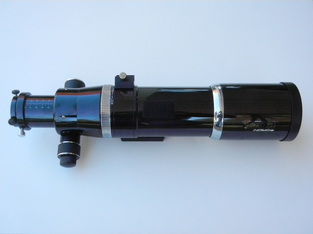
Orion ED80 f/6.25 Refractor
|
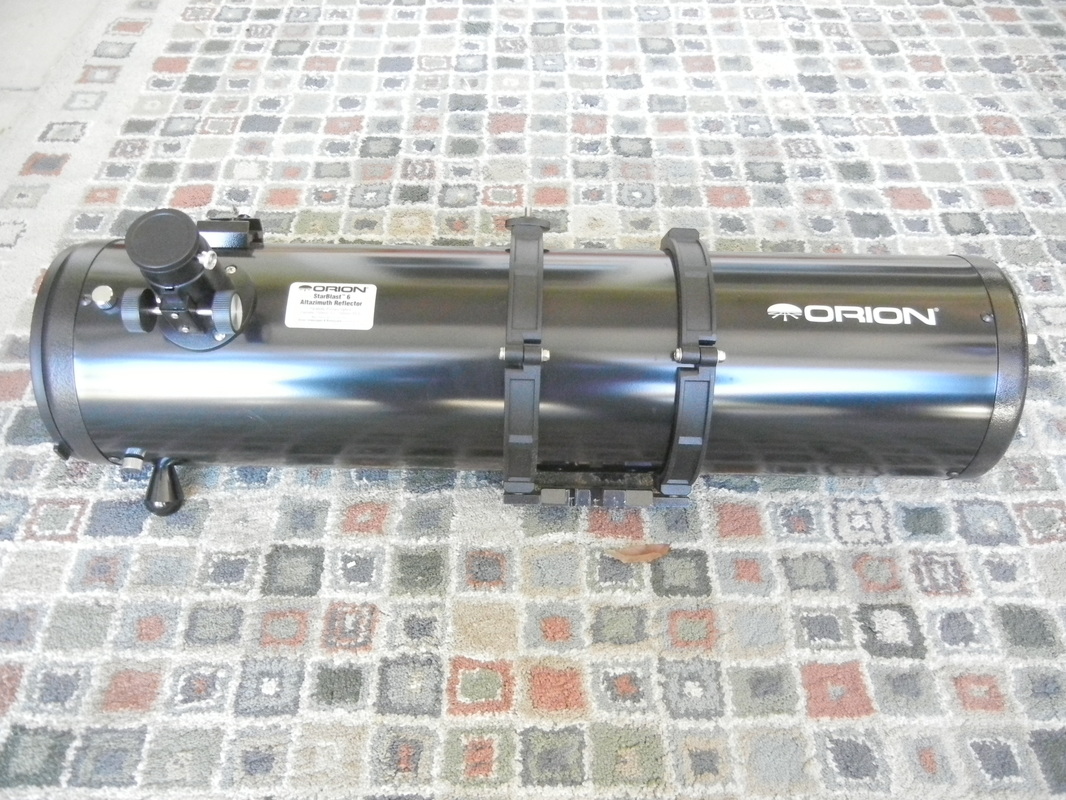
Orion StarBlast 6" f/5 Newtonian
|
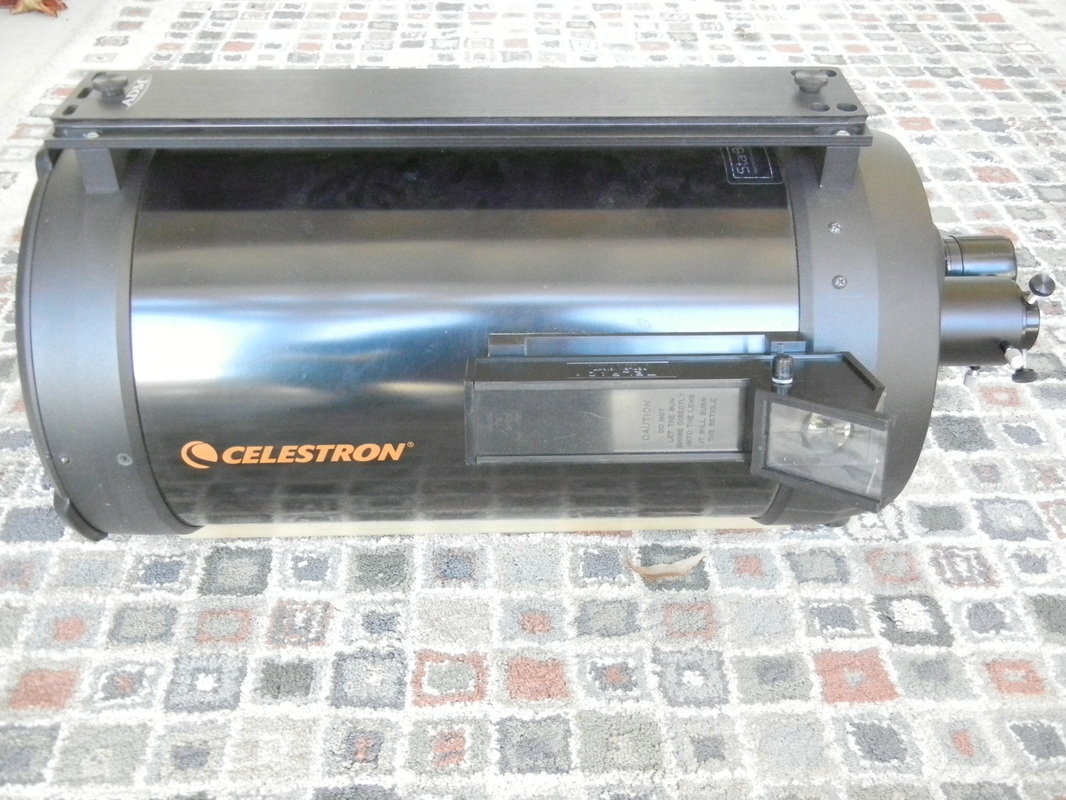
Celestron 9.25" f/10 Schmidt-Cassegrain
|
Newtonians can also be paired with a camera for EAA. However, because of the very limited in-focus travel of these designs, some will require modification to achieve focus. This may require a low profile focuser or moving the primary mirror closer to the secondary. Another option is the smaller form factor video cameras like the MC Micro, which can fit inside the barrel of a 2" focuser, allowing them to get closer to the secondary mirror without modification. There also is the Dob-Cam from Mallincam which has a cylindrical design no larger in diameter than a standard EP.
Any telescope including Maksutov-Cassegain, Astrographs, Ritchey-Chretien and more can also be used with a camera for EAA so long as it can come to focus. For really wide FOVs and a low cost setup, standard camera lenses (50mm, 100mm, 200mm et.) can be attached to the front of the camera with the proper adapter in place of a telescope.
Any telescope including Maksutov-Cassegain, Astrographs, Ritchey-Chretien and more can also be used with a camera for EAA so long as it can come to focus. For really wide FOVs and a low cost setup, standard camera lenses (50mm, 100mm, 200mm et.) can be attached to the front of the camera with the proper adapter in place of a telescope.
© 2020 Curtis V. Macchioni